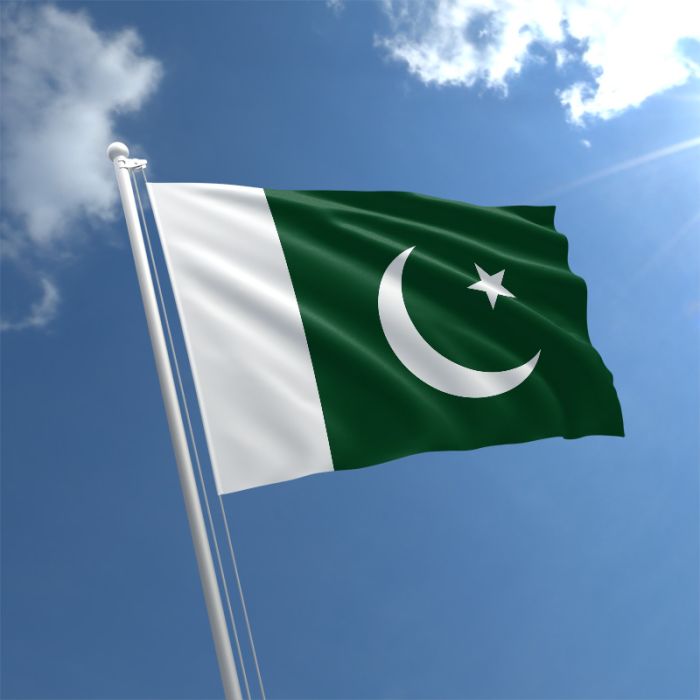
Pakistan, officially the Islamic Republic of Pakistan, is a country in South Asia. It is the fifth-most populous country, with a population of over 241.5 million, having the second-largest Muslim population as of 2023. Islamabad is the nation's capital, while Karachi is its largest city and financial centre. Pakistan is the 33rd-largest country by area, 9th largest in Asia and the second-largest in South Asia. Bounded by the Arabian Sea on the south, the Gulf of Oman on the southwest, and the Sir Creek on the southeast, it shares land borders with India to the east; Afghanistan to the west; Iran to the southwest; and China to the northeast. It shares a maritime border with Oman in the Gulf of Oman, and is separated from Tajikistan in the northwest by Afghanistan's narrow Wakhan Corridor. Pakistan is considered a middle power nation, with the world's sixth-largest standing armed forces. It is a declared nuclear-weapons state, and is ranked amongst the emerging and growth-leading economies.with a large and rapidly-growing middle class.Pakistan's political history since independence has been characterized by periods of significant economic and military growth as well as those of political and economic instability.
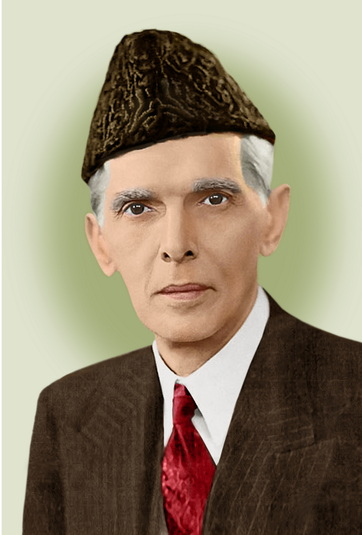
Father of Nation

Muhammad Ali Jinnah born on 25 December 1876 – 11 September 1948) was a barrister, politician and the founder of Pakistan. Jinnah served as the leader of the All-India Muslim League from 1913 until the inception of Pakistan on 14 August 1947, and then as the Dominion of Pakistan's first Governor-General until his death. Born at Wazir Mansion in Karachi, Jinnah was trained as a barrister at Lincoln's Inn in London, England. Upon his return to India, he enrolled at the Bombay High Court, and took an interest in national politics, which eventually replaced his legal practice. Jinnah rose to prominence in the Indian National Congress in the first two decades of the 20th century. In these early years of his political career, Jinnah advocated Hindu–Muslim unity, helping to shape the 1916 Lucknow Pact between the Congress and the All-India Muslim League, in which Jinnah had also become prominent. Jinnah became a key leader in the All-India Home Rule League, and proposed a fourteen-point constitutional reform plan to safeguard the political rights of Muslims in the Indian subcontinent. As the first governor-general of Pakistan, Jinnah worked to establish the new nation's government and policies, and to aid the millions of Muslim migrants who had emigrated from neighbouring India to Pakistan after the two states' independence, personally supervising the establishment of refugee camps. Jinnah died at age 71 in September 1948, just over a year after Pakistan gained independence from the United Kingdom. He left a deep and respected legacy in Pakistan. Several universities and public buildings in Pakistan bear Jinnah's name. He is revered in Pakistan as the Quaid-e-Azam ("Great Leader") and Baba-e-Qaum ("Father of the Nation"). His birthday is also observed as a national holiday in the country. According to his biographer, Stanley Wolpert, Jinnah remains Pakistan's greatest leader.

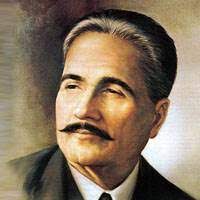
Thinker of Pakistan

Muhammad Iqbal was a South Asian Muslim philosopher, author,and politician. His poetry is considered to be among the greatest of the 20th century, and his vision of a cultural and political ideal for the Muslims of British-ruled India is widely regarded as having animated the impulse for the Pakistan Movement. He is commonly referred to by the honourific Allama. qbal was a strong proponent of the political and spiritual revival of the Muslim world as a whole, but particularly of the Muslims in the Indian subcontinent; a series of lectures he delivered to this effect were published as The Reconstruction of Religious Thought in Islam in 1930. He was elected to the Punjab Legislative Council in 1927 and held several positions in the All-India Muslim League. In his Allahabad Address, delivered at the League's annual assembly in 1930, he formulated a political framework for the Muslim-majority regions spanning northwestern India, spurring the League's pursuit of the Two-Nation Theory. Iqbal's father, Sheikh Noor Muhammad (died 1930), was a tailor, not formally educated, but a religious man. Iqbal's mother Imam Bibi, a Kashmiri from Sambrial, was described as a polite and humble woman who helped the poor and her neighbours with their problems. She died on 9 November 1914 in Sialkot.Iqbal loved his mother, and on her death he expressed his feelings of pathos in an elegy.

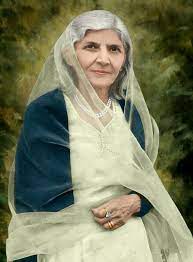
Mother of Nation

Fatima Jinnah(31 July 1893 – 9 July 1967) was a Pakistani politician and stateswoman. She was the younger sister of Muhammad Ali Jinnah, the founder and the first governor-general of Pakistan. She was the Leader of the Opposition of Pakistan from 1960 until her death in 1967. After obtaining a dental degree from the University of Calcutta in 1923, then she became the first female dentist of undivided India; she also became a close associate and an adviser to her older brother, Muhammad Ali Jinnah, who later became the first Governor General of Pakistan. After the independence of Pakistan, Jinnah co-founded the Pakistan Women's Association which played an integral role in the settlement of the women migrants in the newly formed country. She remained the closest confidant of her brother until his death. Her legacy is associated with her support for civil rights. She is commonly known as Madar-e-Millat ("Mother of the Nation") and Khatun-e-Pakistan ("Lady of Pakistan"), many institutions and public spaces in Pakistan have been named in her honour. Jinnah accompanied her brother to every public appearance that he made. She travelled to London, England in 1930 where she learned to speak English. Jinnah lived there for 4 years. After she moved back to India, Jinnah sought to make an independent homeland for Indian Muslims. During the transfer of power in 1947, Jinnah formed the Women's Relief Committee, which later formed the nucleus for the All Pakistan Women's Association (APWA) founded by Rana Liaquat Ali Khan. She also played a significant role in the settlement of Muhajirs in the new state of Pakistan.

More Popular Leaders

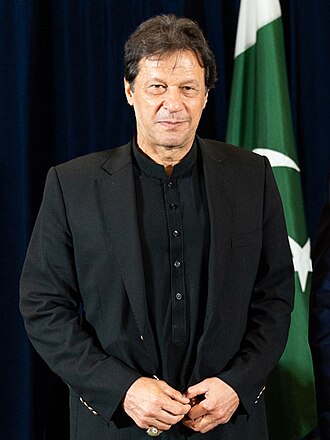
Imran Khan

Imran Ahmed Khan Niazi is a Pakistani politician and former cricketer who served as the 22nd prime minister of Pakistan from August 2018 until April 2022. He is the founder and former chairman of the political party Pakistan Tehreek-e-Insaf (PTI) from 1996 to 2023.

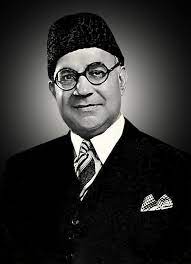
Liaquat Ali Khan

Liaquat Ali Khan was a Pakistani lawyer, politician and statesman who served as the first prime minister of Pakistan from 1947 until his assassination in 1951. He was one of the leading figures of the Pakistan Movement and is revered as Quaid-e-Millat "Leader of the nation".

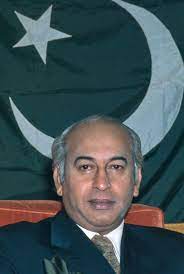
Zulfiqar Ali Bhutto

Zulfikar Ali Bhutto was a Pakistani barrister, politician, and statesman. He served as the fourth president of Pakistan from 1971 to 1973 and later as the ninth prime minister of Pakistan from 1973 to 1977. Bhutto founded the Pakistan People's Party (PPP).

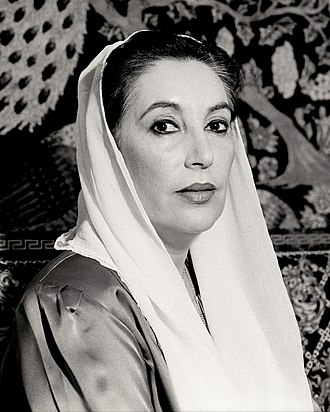
Benazir Bhutto

Benazir Bhutto was a Pakistani politician and stateswoman who served as the 11th and 13th prime minister of Pakistan from 1988 to 1990 and again from 1993 to 1996. She was the first woman elected to head a democratic government in a Muslim-majority country.